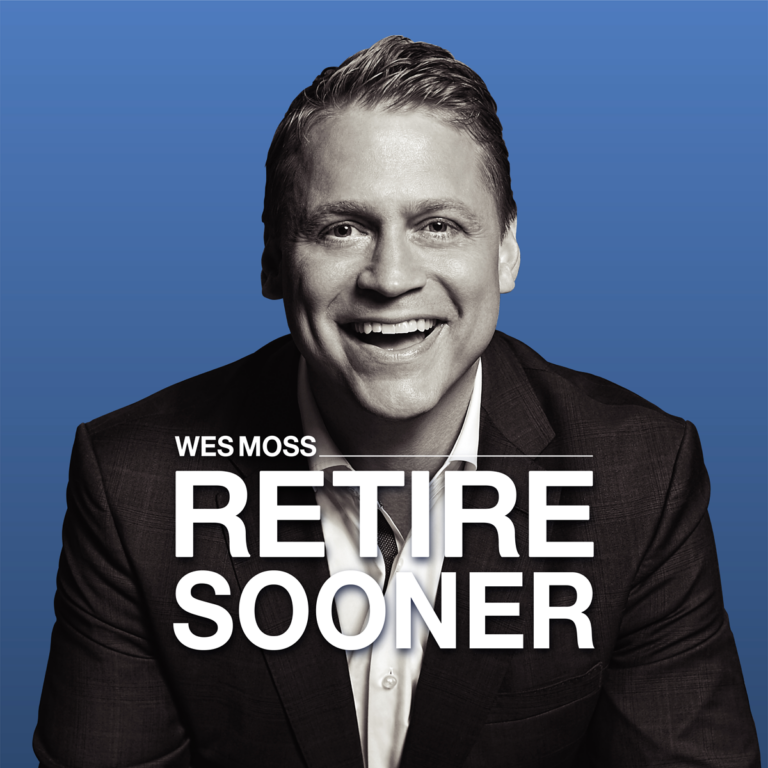
What belongs in your retirement plan beyond investments? Join Wes Moss and Christa DiBiase on the Retire Sooner Podcast to explore market cycles, retirement income, and social connections.
In This Episode
- Put market volatility, post-election swings, and AI spending concerns into perspective.
- Explore bull and bear markets, historical trends, and the limits of calendar-based investing.
- Examine financial advisor transparency, annuity commissions, and compensation disclosures.
- Weigh saving for financial independence against enjoying life today.
- Consider uncertainty in investment returns and retirement savings projections.
- Explore how market declines and taxes may influence “dry powder” retirement withdrawals.
- Examine America’s “friendship recession” and social connections in retirement.
- Review declining socialization, increased screen time, and fewer in-person gatherings.
- Consider Wes’s challenge to join a new group after Thanksgiving.
- Explore bond-ladder alternatives within a restricted TIAA 403(b) plan.
- Distinguish target-maturity bond funds from funds with different durations.
- Clarify spousal Roth IRA eligibility, income limits, and compensation requirements.
Listen and subscribe to the Retire Sooner Podcast for conversations about retirement finances and life beyond your portfolio.
Full Episode Transcript
Click here to read the full transcript
Christa DiBiase [00:00:03]: Hello, Wes.
Wes Moss [00:00:04]: Good day, Christa.
Christa DiBiase [00:00:05]: Good day.
Wes Moss [00:00:05]: I almost said good morning, but I’ll just say good day.
Christa DiBiase [00:00:07]: So first you’re going to give us an update on the stock market. It’s been a bit of a wild ride lately.
Wes Moss [00:00:13]: Absolute bungee cord.
Christa DiBiase [00:00:15]: Bungee cord. And then later today, you’re also going to talk about— we’re all getting ready for the holidays. You may be going to spend time with family or friends, Friendsgiving, Thanksgiving. What’s going on with—
Wes Moss [00:00:26]: oh, there is a bear market. I’m talking about socialization in America. It’s in focus with Thanksgiving around the corner.
Christa DiBiase [00:00:33]: Okay. And I’ve got, of course, a lot of questions for you that came in at westmoss.com/ask.
Wes Moss [00:00:41]: We worry about these, and you brought this up a couple weeks ago where there are market euphemisms or market stock market almanac where events that people remember, that spell, well, that means the market’s gonna do well, or the market’s gonna do bad because of this pattern or this calendar date comes around.
Christa DiBiase [00:01:01]: We’re gonna get a September surprise. You know, all that.
Wes Moss [00:01:04]: And, and, and this is a similar notion, but it’s upon us, which is the age of the bull market. Because we know that if we’re looking at the traditional bull market sense is where we get a bear market and then we get a rise from there, and then, and we stay without a 20% correction. That’s the traditional way to look at it. The bull market has turned 4 years old. And I’ve, I’ve read several times now, does that mean we’re, it’s about to end? And we know that the average bull market is closer to 5 years. So people start to get nervous around this year 4.
Christa DiBiase [00:01:39]: Yeah.
Wes Moss [00:01:39]: And the reality is that there is not, just because there’s some sort of calendar date or anniversary really doesn’t mean that the bull market has to end. And the way to look at this in a slightly different way, and I think maybe more constructive way, is to zoom out further and look at how markets act over longer periods of time. And, and my sense is if you were to do that, well, I, I do this, but if you really look at markets and you didn’t count every time we had a -20, even though we may have bounced back relatively quickly, and the COVID decline is a really good example of that where we dropped 30%. Mm-hmm. But within a really short period of time, we’re kind of back to where we were. Does that mean we ended a bull market? Technically it does, but doesn’t it make more sense that we’re in a longer-term bull market really since 2009? Here’s a bear market. A bear market is 2000 all the way to 2009 where the market was down that whole period of time and really didn’t get back to even until a few years after that. Now you can say that because we didn’t get above the bear market low, This current longer-term, or you could even call this a secular longer-term versus cyclical bull market, didn’t really start until 2013.
Wes Moss [00:03:00]: But if you’re looking at from the low to where we are today, even though we’ve had a couple of bear markets, you can make the argument that it has been a much longer period of time. And I think that’s important for investors to think about. This has been more like a 17-year year bull market. And I think that’s a more important way to look at it. Since World War II, this is the way you can categorize these longer-term periods of time that were overall really constructive. They were bull markets. Doesn’t mean we didn’t have a couple big hiccups, but the post-war expansion was, was really June of 1949 all the way to 1973 before we went into a long really difficult period of time for a while. And then when we got to 1982, we’d kind of gotten out of that long ’70s malaise.
Wes Moss [00:03:51]: And we went from 1982 all the way to March of 2000. It was another really long bull market period of time, even though we had some big hiccups. Think about the crash of 1987 was in the middle of that. Mm-hmm. But the longer-term trajectory there averaged 19% a year. The, the 1949 to 1973 period was almost 14% a year. Again, above that, call it 10, 11% average rate of return. And then what I would look at is this post-financial crisis, longer-term bull market that we are still in and really started, in my opinion, in 2009.
Wes Moss [00:04:31]: The world kind of got washed out. The sentiment was terrible. The market was low. Nobody thought that we were gonna get back to economic prosperity because of the housing crisis and the great financial crisis, but we did. And we’ve really been in a longer-term uptrend ever since, averaging a little over 16% per year since that period of time. So, when we’re nervous and we hear about the bull market is 4 years old and we have this anniversary date or this calendar date and it makes us worried and we’re going to change our plan because of it, I want to caution against that because as we all know, and as you listening, despite all of the recent, very recent, Ups and downs of the market. I feel like we’ve kind of had a mini earthquake and we’re feeling some aftershocks. I mean, after the day after the midterm election, the Dow was up over 1,500 points, just this massive market rally.
Wes Moss [00:05:24]: And I would explain that by certainty. Hey, we know what happened. Markets like certainty. Then the next day it was almost all erased.
Christa DiBiase [00:05:30]: Mm-hmm.
Wes Moss [00:05:31]: And there’s this worry about the AI trade slowing down, lower capital expenditures over the next couple of years. So I would just look at the general market, the S&P 500, and not, and, and not focus in on, on the NASDAQ, which is really almost all tech, and be very measured and cautious about ending this bull market just because of a calendar date. That’s not how we run a financial plan. It doesn’t necessarily meet your goals to do it that way. And I think zooming out and looking at longer-term periods of time, and we’re still in that. is an important way to look at it.
Christa DiBiase [00:06:08]: Okay. All right, we’re gonna go to some questions. This one is from Greg, who’s from the state you grew up in, Wes. He’s in Pennsylvania.
Wes Moss [00:06:15]: Pennsylvania guy. Hey, Greg.
Christa DiBiase [00:06:17]: He says, fiduciary or otherwise, how acceptable is it to ask a financial planner or advisor what commission they would make on a given product, such as an annuity? Do they have any responsibility to actually disclose that information? And if they decline, is that a warning sign or just part of the business?
Wes Moss [00:06:36]: Greg, I think that now that when you’re talking about an annuity, remember these are insurance products, so the rules are a little bit different and there is some variation from state to state. But really, as a financial consumer, whether you’re with an advisor that is there for— they have to be, quote, make prudent decisions for you versus a fiduciary, which is your best interest. Then I am a big believer that there should be transparency. And there’s no question about that. If you ask an advisor what their overall fee is, they absolutely— not only should they tell you, but they really have to tell you. The rules, I think, are a little bit different on annuities. They have to give you a range. I don’t think they have to give you an exact commission or an exact dollar amount, but I believe they need to give you some sort of percentage range.
Wes Moss [00:07:29]: But parsing those rules, if you get into that parsing of what they’re going to disclose and not disclose and transparent or not, that in itself is a major problem. So I would be running the other direction if someone that I was doing business with, particularly for my financial future, to not be as transparent as they can possibly be, then yeah, it’s a huge red flag. And if that’s an issue, I would be looking for someone else for guidance.
Christa DiBiase [00:07:57]: Okay. Ben in Wisconsin says, I’m hoping you can help guide some of us who are in their mid to late 30s. My wife and I have already set aside $600,000 for retirement and have been between 6 and 9 months in an emergency fund. With our current contribution figures and using a conservative 7% return, models indicate we will have near $5 million by 60. This figure is likely well over the amount we will need using a 4% rate of withdrawal when the time comes. We have a handful of individuals that have told us to take the foot off the gas a bit and spend more today. I already believe we live a comfortable life and provide our kids with great experiences. Are we at a place where it’s okay to stop increasing our contribution rate each year and hold on to the additional cash flow? Looking for some much-needed guidance.
Wes Moss [00:08:47]: Ben, live a little bit. Buy a boat.
Christa DiBiase [00:08:50]: Oh no.
Wes Moss [00:08:51]: Go get a second home. You’re already on track. You’re Coast FI, man. That’s what your friends are saying.
Christa DiBiase [00:08:57]: Okay, good.
Wes Moss [00:08:57]: That’s what your friends are saying to you, because there is a little bit of the— I think there’s a lot of— there’s keeping up with the Joneses, and then there’s the Joneses not wanting you to keep up with them. And I think that’s what this is, Ben. And yeah, first of all, I wouldn’t, I wouldn’t assume that $5 million is way more than you need, because you’re only— let’s call you 35. You said mid-30s. You don’t know where the world will be in 25 years from now. So I wouldn’t look at that number and say, that’s just too much to save. That’s, I wouldn’t look at that at all. So I’d still keep your eyes on that prize because you’ve obviously done some math and you think that that will work for you.
Wes Moss [00:09:34]: So don’t, don’t short yourself on that. Number one. Number two, at a 7% rate of return, which yes, over time is, the market has done better than that. It’s not a guarantee at all that we’ll have that rate of return over, over the next 25 years, but it’s not a conservative number, but it’s, I think, realistic. Yeah. But the question is, what is, what is, what do they mean by foot off the gas? You said the word, I wrote this down. You said you’re really comfortable already. So why would you, if you’re comfortable, then added savings and investment only do 2 things.
Wes Moss [00:10:10]: They make you even more comfortable and they help you arrive at that destination even sooner. The retire sooner method, in my opinion, is it getting to financial independence. And getting there sooner, in my opinion, is very much better. So my just back of the, the napkin math tells me that if you keep saving about $30K a year, your $600,000 at 7% will get you to about that $5 million number. But I would contend if you’re doing both, you and your wife are maxing out. Christa, Ben’s probably saving a little more than that. Mm-hmm. He’s probably more like, $50K a year.
Christa DiBiase [00:10:50]: Well, it depends on his income, right? And what he’s able to save.
Wes Moss [00:10:53]: Well, I’m saying maxing.
Christa DiBiase [00:10:54]: Yeah.
Wes Moss [00:10:55]: If you’re maxing, if both partners are maxing, I think that he probably has a decent income and probably have been able to max out if you’re already at $600K by 35. And to say, hey, we’re only going to max out one 401 and only save, let’s say, plus a little bit, we’re going to get to $30 grand because we’re all, we only want to get to 5. God forbid we get to 6. I don’t think you should be taking your foot off the gas. Your people are not out there for your best interest because your wealth superseding them makes them feel like they’re behind. So don’t listen to them, listen to your plan. And that’s my takeaway.
Christa DiBiase [00:11:31]: Okay. And I’ve got another person from Pennsylvania. Doug’s in Pennsylvania. Doug says, you often talk about having 3 years of dry powder. I was wondering what the spend-down strategy looks like on dry powder and what the market conditions would have to look like to start that spend-down. For instance, if the market’s down 20%, do you recommend using 100% dry powder for that year?
Wes Moss [00:11:57]: Well, there are some rules of thumb here. The short answer, Doug, and again, if you’re in retirement and you’re, you’re in withdrawal mode here and you need your assets for spending. Then if you’re down 5% market, that’s totally normal garden variety. It happens all the time. So don’t even think about shifting over to dry powder because the stock market is down 5%. Maybe as it gets down to 10% and you’re in correct— we’re in correction mode, you start to lean on your dry powder at least a little bit. And that’s fine, but it’s really meant for that 20% or greater decline to lean on your dry powder. You get to 20%, then you’re really leaning on dry powder.
Wes Moss [00:12:37]: Just also note though that that formula isn’t etched in stone. It’s not perfect. It’s a guideline because your tax situation may be slightly different too. It depends on where your assets are, IRA versus non-IRA or brokerage versus Roth. So the second layer of consideration here is making sure you’re still controlling your income. But for the most part, we go down 10, you start potentially using your dry powder. We go down 20, that’s when you start to really lean in on it.
Christa DiBiase [00:13:09]: Okay. We’re going to take a quick break. And when we come back, you’re going to talk about the bear market that may be happening in our social lives.
Wes Moss [00:13:20]: This Thanksgiving, when you’re sitting around the table, take a look around because after studying thousands of retirees, I found the happiest ones aren’t just doing things. They’re doing things with people, cooking with, traveling with, laughing with. We’re in the middle of a friendship recession in this country. In my new book, The Retire Sooner Method, I’ll show you ways to fight back and build the connections that make for happy retirees. Pick up your copy today on Amazon or your local bookstore. Thanksgiving’s coming up. How many people are coming to your house? Think about that. How many people are coming to your house, Christy?
Christa DiBiase [00:13:57]: I’m leaving.
Wes Moss [00:13:58]: Even better. Where are you going?
Christa DiBiase [00:13:59]: I’m going on a trip. I’m going to Charleston. I’m very excited.
Wes Moss [00:14:02]: Is it going to be lots of family or just you and a special someone?
Christa DiBiase [00:14:08]: A special someone and some friends. I’m going to eat out on Thanksgiving and go to a concert. Oh, cool. Yeah, my daughter is going to be out in Colorado visiting friends. And yeah, so I’m going to do something early with my parents and my son, um, at home before I leave, and then I’m getting out of town.
Wes Moss [00:14:28]: So family, then friends. Family, then friends. Here are the statistics, and we’ve talked about a friendship recession, and it’s something that I’ve talked a lot about in the Retire Sooner Method because part of the Retire Sooner Method is the maintaining and building of your community for your entire life, and it gets harder and harder. The headwinds get worse and worse the older we get, so we have to really work on maintaining relationships and friendships. And I have statistics I’ve talked about here. Kind of the quick reminder is that the number of Americans with 5 or more close friends since 1990 has fallen by 25%, which is a massive number. The share of the United States adults with no close friends is all the way up to 18%. Wow.
Wes Moss [00:15:19]: It was something like 3— it’s up 500% since 1990. The share of adults with more than one close friend, uh, or only, uh, one close friend has, has dropped or gone up. It’s gone up by 64%. Retirees who say they have enough close friends, 41% of the group that’s in the unhappy retiree camp said yes to that. But in the happy retiree camp, it was 81%. Mm-hmm. So there’s, there’s clearly, it’s really hard to even argue this, that we need socialization in our lives in order to have a happy retirement. And it’s beyond just happy retirement.
Wes Moss [00:16:01]: But the Bureau of Labor Statistics just came out with their ATUS study, the American Time Use Study, where they ask you to categorize your day. Uh, what are you doing? Are you eating? Are you sleeping? Are you, On your phone? Are you playing video games? Are you working? Are you socializing? And this number really jumped out at me. And this is why I can say we officially have a bear market, meaning down 20% or more in socialization. In fact, overall, this is the whole data set over the past 20 years, daily socializing with a friend. And this is not family. This is with friends. Fell from 45 minutes to 35 minutes, which is a 22% drop. And then the steepest decline is from young folks.
Wes Moss [00:16:49]: So here are a couple other statistics. This is over the last 10 years, Americans 15 years and older, socialization dropped 41 to 35 minutes. That’s a 15% decline. Over 20 years, it’s a 22% decline. Mm-hmm. That’s the bear market in socialization I’m talking about. Now it’s even worse for young people, Christa. And this is what jumped out at me.
Wes Moss [00:17:11]: I think I first read this in the Wall Street Journal. Young people ages 15 to 24 in that same 20-year span, the last 20 years, used to socialize an hour a day, 60 minutes. Today it’s down to 35. That’s a 42% drop.
Christa DiBiase [00:17:30]: It must be the screens, right?
Wes Moss [00:17:33]: Well, funny you should ask because the TIME study didn’t just ask about socialization. It said, where did the time go? Leisure time spent on games and computers.
Christa DiBiase [00:17:43]: Yeah.
Wes Moss [00:17:44]: That means video games, which by the way, we had in earnest 20 years ago as well. They are even better today. They’re even more compelling and they’re even more addictive today than they’ve ever been. And the numbers show it. There is a 48% increase in the amount of time that group spends playing video games over the last 20 years. All right. What’s another reason for this? Well, gathering has dropped dramatically. Entertaining people at your home.
Wes Moss [00:18:13]: And again, I, this is, I don’t know if these all make sense to me. Maybe they’ll make sense to some folks, but think about this. In 1995, this is a long time span versus last year. It just dropped 24%. So dinner parties down 25%. Attending church or a place of worship has also dropped dramatically, down almost 30% during that period of time. Uh, now this one’s kind of funny that I would never have asked. Went on a picnic.
Wes Moss [00:18:44]: I, again, that was, I’ve never gone on a picnic, I think, in my entire life, but I guess it was a pretty popular thing back in 1995 because 60% of people did it. Now only about 39% of people do. So that’s down 33%. God forbid the disappearance of the picnic in America. And then just attending a club meeting of any club or organization, that’s the biggest shocker in my opinion, down 42%. So not only do we have a friendship decline, but we have a coinciding, just general decline of socialization, face-to-face gathering time with friends, which is the component that is Almost as, maybe not quite as important as family, but we need both in our lives. And here around this Thanksgiving period of time, when you’re with your family, think about the importance of not just your family, but your broader community. And if there was just one thing, one way to combat this, Christa, what would it be?
Christa DiBiase [00:19:45]: My gosh. I mean, for me, it’s like getting people together to play games, making appointments with your friends to go out to dinner. I mean, for kids that are playing video games, I was just thinking about this when you were talking about it. You used to have to get together with your friends to play a 2-player game.
Wes Moss [00:20:00]: That’s a great point.
Christa DiBiase [00:20:01]: Now they can just go online with a random stranger and play too. You can do all club meetings. They probably might do something online or you’re part of a group on social media.
Wes Moss [00:20:11]: Wouldn’t the answer be just to destroy all video games?
Christa DiBiase [00:20:13]: Destroy the screen. Well, screens, we all live in our screens. It’s awful.
Wes Moss [00:20:17]: I think the answer is be a joiner. And I talk to families about this. I had a couple the other day say, He’s not a joiner. Literally, she said, he’s not a joiner, which I love to hear because it’s such a powerful word. She goes, I’m a joiner.
Christa DiBiase [00:20:33]: Yeah.
Wes Moss [00:20:34]: Meaning that it doesn’t matter what gathering place we choose, but whether it’s a joining of a book club or a sport league, whether that’s pickleball or joining a golf group or joining a yoga group or joining an exercise group or joining a cards group or joining a book club, or joining a church or joining a volunteer group, even for extroverts, this is hard.
Christa DiBiase [00:20:55]: Mm-hmm.
Wes Moss [00:20:56]: And the older we get, it really is not a super easy thing to do is to say, I’m going to join a new group. Maybe there’s a skill involved and you say, ah, I’m not that good at that skill, or I’m not that good at this game, or I’m not, and I’ve gotta go meet a whole bunch of new people. Even for extroverted people, it’s daunting. And the older we get, it’s harder. But that to me is the, perhaps, the most powerful elixir to fight against this lack of socialization. Because once you get over the hump of saying, okay, I’m gonna join, and you test out 2 or 3 groups in a given year, and this is the challenge I would give you, uh, post 30 days of Thanksgiving, see if you can join one new group for the next 30 days after Thanksgiving. Talk about it at the dinner table. See if you can join one new group.
Wes Moss [00:21:44]: And if you may not like it, and it may be the precursor to joining another group, but it is a really helpful, powerful thing to fight against the decline in community that we see literally now statistically from the Bureau of Labor Statistics, and we need to fight against it.
Christa DiBiase [00:21:59]: Okay, I like that advice. Here are some questions for you. This one’s from Mid-Career Mike in New York.
Wes Moss [00:22:05]: Now that’s a name I love.
Christa DiBiase [00:22:06]: I know.
Wes Moss [00:22:07]: Mid-Career Mike.
Christa DiBiase [00:22:08]: He knows you. I have a 403 account with TIAA. They have a brokerage window which greatly expands the options for investing. However, all options are mutual funds and money market funds. No individual stocks and no ETFs. I’d like to build a bond ladder in this age of TARA, but representatives there—
Wes Moss [00:22:29]: Which by the way means, he’s referring to TINA was there are no alternatives. There is no alternative to stocks. TARA means there are alternatives to stocks.
Christa DiBiase [00:22:40]: But representatives there tell me it isn’t possible to purchase individual new issue government bonds. How would you build a bond ladder in this case? Can you do it with mutual funds that serve as proxies for variable duration bonds. I don’t really want to put them in my taxable brokerage accounts for a variety of reasons, and my IRA is too small to serve this purpose. I like TIAA, but I wish these institutional-supported retirement platforms had at least a little more flexibility in the instruments they offer people with long-term investing horizons.
Wes Moss [00:23:13]: Mid-career Mike, most of them do. If you’ve got a brokerage link, is usually the term for a retirement plan to allow you to have more flexibility. Usually the architecture is opened up, meaning you can, you can buy anything typically from the ones I know about— stocks, mutual funds, individual bonds, ETFs, you name it. It just sounds like this is a super limited version of that. And if you’re only able to do mutual funds, there are some— the vast majority of the— I’ve only, when it comes to finding a targeted date bond fund, not a target date fund, a targeted date bond fund. That’s specific maturity, 2030, this matures. I’ve only used ETFs to do that. There are some mutual funds that do the same thing.
Wes Moss [00:24:02]: I doubt they’re available from what you’re telling me to you. So it means that you, you probably don’t have an option to nail your duration like you’re wanting to on the bond side. What’s the next best thing is to, and I’m, you likely will have these options. Be really intentional around the term of your bond funds. And every bond fund, you pull it up on Morningstar, or probably even within your 401 plan in the brokerage, like it should show you the duration. And the duration is a measure of how long the average bond until it matures, plus how much you get as a coupon. And what you can do is have a short duration bond fund. It’s not quite like having a 20, 29 or 2030 bond-targeted portfolio, but is somewhat close.
Wes Moss [00:24:51]: And that’s the way you can manage this because though you’ll also have intermediate versions of that and where the duration is a little longer, and then there’ll be long-term bond mutual funds. And you can, if you want to make the decision on that, that would give you a version of a bond ladder, uh, that is likely in an actively managed, or maybe it’s, these are index funds, which you can find too. But that’s the closest way to try to accomplish what you’re doing with what sounds like a really limited brokerage link.
Christa DiBiase [00:25:20]: Okay. And on this next one, this is Dan in Oregon. Do you want me— I do wonder if you want me to name this alleged investment.
Wes Moss [00:25:28]: Yeah. Let’s say XYZ.
Christa DiBiase [00:25:31]: Okay.
Wes Moss [00:25:32]: But still make the name. I like that name. That’s interesting.
Christa DiBiase [00:25:35]: Dan in Oregon says, we’ve been approached about investing in XYZ cash cow NFTs. Are you familiar with this and what are the pros and cons of this investment?
Wes Moss [00:25:46]: Okay. Dan in Oregon, you don’t mean NFTs because those are—
Christa DiBiase [00:25:52]: yeah,
Wes Moss [00:25:52]: the NFT is the tokenization of a painting or an image. You mean ETFs. And I know that because you said Cash Cow. That’s a branded ETF out in the universe that I wouldn’t say I use these, but I know of them relatively well. A cash cow ETF or any ETF, but, and I think this is a broader question where the name does matter because the name typically of an ETF or mutual fund is trying to give you a preview of the philosophy of the fund or the ETF. So this particular version, I’m relatively sure that it is meaning this is an ETF that’s going to have a bunch of companies that are good about paying dividends and they may be rising dividends or they may have a really strong dividend track record. And there is, in my opinion, that’s a really good area of the marketplace to be looking at. Now, again, I’m not saying these exact ETFs or these specific ones, and I think we did XYZ just to not put the name in there, but yes, that is absolutely a strategy that can work.
Wes Moss [00:27:02]: It’s a little bit more of a conservative stock strategy or conservative equity strategy. Note that some of these dividend-paying ETFs, the, the yields don’t sound all that great right now. Mm-hmm. Just because the overall yield on the S&P 500 is at a historic low. It’s a little, let’s say 1.2, 1.25%, let’s say. So a cash cow dividend ETF may only be at 2% or 2.25%. So it’s not a shockingly high amount of dividends from a yield perspective. But on a relative basis, that’s how you have to look at it.
Wes Moss [00:27:39]: So yes, I think it’s a good area to be looking at.
Christa DiBiase [00:27:41]: Okay. It makes me nervous when he says approach about investing in something like that. Always makes me nervous. Like, who’s approaching you with this investment? You know?
Wes Moss [00:27:48]: Yeah, that’s, that’s true too.
Christa DiBiase [00:27:50]: Okay. Lisa in Connecticut says, can you explain spousal Roth contributions? My husband is retiring soon and I will continue working. What are the rules for me to add to his Roth account?
Wes Moss [00:28:02]: So, Lisa, the 2 main rules are, one, you’ve got to just— you’ve got to be able to qualify. Your adjusted gross income has to allow for Roth contribution. So, because you’re married, it would be the joint level. So, as long as you’re under the AGI max or limit, then that’s test one. Test 2, even though he may have zero income, as long as you have income, that covers the amount you want to put in yours plus his, then technically you should be fine. But again, it does come back to you. It sounds like you guys are filing jointly or looking at your adjusted gross income as a couple still. That matters.
Wes Moss [00:28:43]: And then making sure you have real wage income, and then that allows for you to put money into his, his Roth as a spousal contribution. All
Christa DiBiase [00:28:54]: right,
Wes Moss [00:28:55]: Chris, I love having you here. I love these questions. So thank you as always for being in studio. You can find me throughout the week. We’re at yourwealth.com. That’s Y-O-U-R, yourwealth.com. Have a wonderful rest of your day.
Disclosure [00:29:10]: Hey y’all, this is Mallory with the Retire Sooner team. Please be sure to rate and subscribe to this podcast and share it with a friend. If you have any questions, you can find us at West That’s W-E-S-M-O-S-S.com. You can also follow us on Instagram and YouTube. You’ll find us under the handle Retire Sooner Podcast. And now for our show’s disclosure. This is provided as a resource for informational purposes and is not to be viewed as investment advice or recommendations. This information is being presented without consideration of the investment objectives, risk tolerance, or financial circumstances of any specific investor and might not be suitable for all investors.
Disclosure [00:29:47]: The mention of any company is provided to you for informational purposes. and as an example only and is not to be considered investment advice or recommendation or an endorsement of any particular company. Past performance is not indicative of future results. Investing involves risk, including possible loss of principal. There is no guarantee offered that investment return, yield, or performance will be achieved. The information provided is strictly an opinion and for informational purposes only, and it is not known whether the strategies will be successful. There are many aspects and criteria that must be examined and considered before investing. This information is not intended to and should not form a primary basis for any investment decision that you may make.
Disclosure [00:30:24]: Always consult your own legal, tax, or investment advisor before making any investment, tax, estate, or financial planning considerations or decisions. Investment decisions should not be made solely based on information contained herein.
Call in with your financial questions for our team to answer: 800-805-6301
Join other happy retirees in our Retire Sooner Facebook Group
This information is provided to you as a resource for educational purposes and as an example only and is not to be considered investment advice or recommendation or an endorsement of any particular security. Investing involves risk, including the possible loss of principal. There is no guarantee offered that investment return, yield, or performance will be achieved. There will be periods of performance fluctuations, including periods of negative returns and periods where dividends will not be paid. Past performance is not indicative of future results when considering any investment vehicle. The mention of any specific security should not be inferred as having been successful or responsible for any investor achieving their investment goals. Additionally, the mention of any specific security is not to infer investment success of the security or of any portfolio. A reader may request a list of all recommendations made by Capital Investment Advisors within the immediately preceding period of one year upon written request to Capital Investment Advisors. It is not known whether any investor holding the mentioned securities have achieved their investment goals or experienced appreciation of their portfolio. This information is being presented without consideration of the investment objectives, risk tolerance, or financial circumstances of any specific investor and might not be suitable for all investors. This information is not intended to, and should not, form a primary basis for any investment decision that you may make. Always consult your own legal, tax, or investment advisor before making any investment/tax/estate/financial planning considerations or decisions.