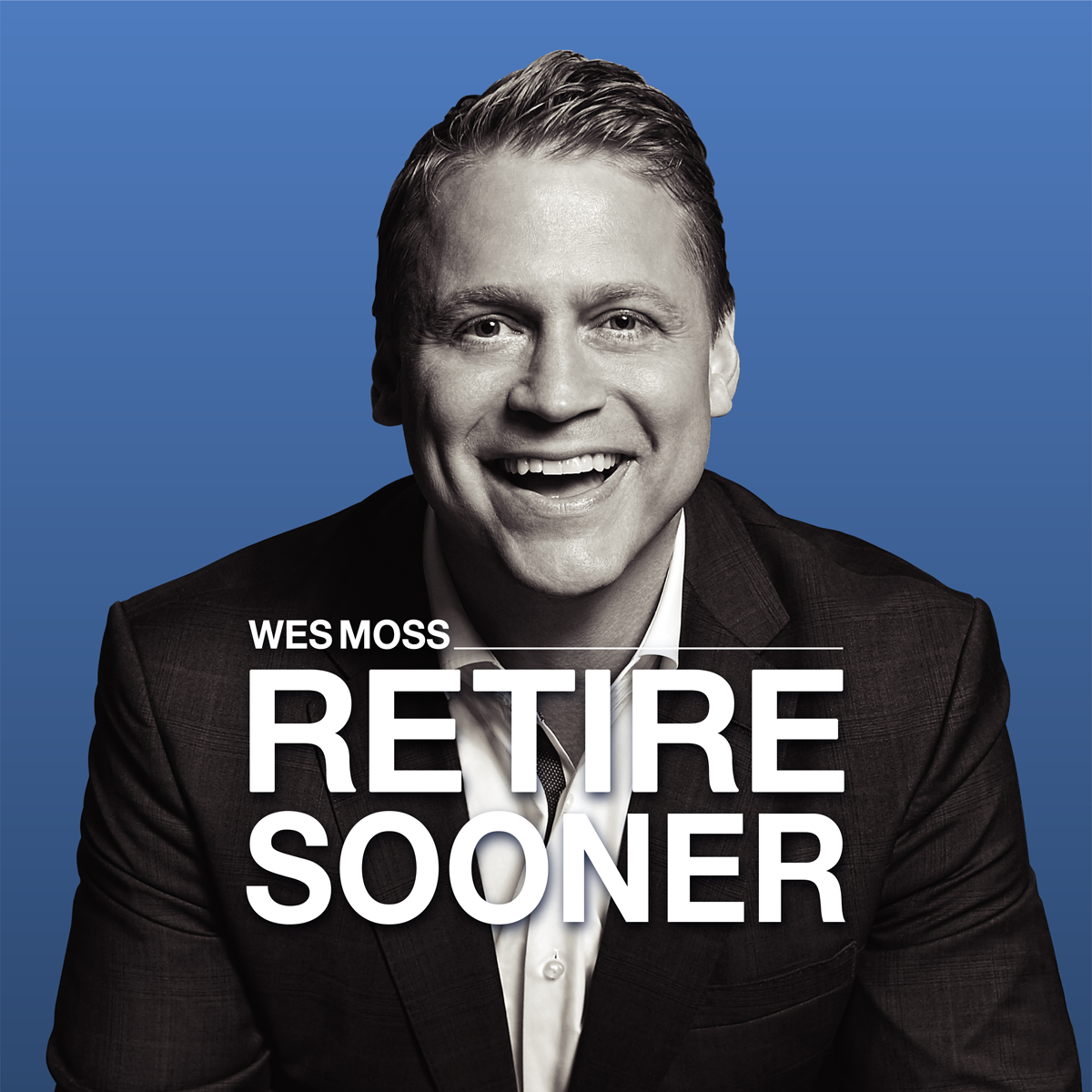
Retirement planning is often shaped by disciplined decisions, market realities, and investor behavior. In this episode of the Retire Sooner Podcast, Wes Moss and Christa DiBiase address timely retirement investing questions and frame them within a long-term, evidence-based approach designed to inform—not predict—financial outcomes.
-
Compare dollar-cost averaging versus lump-sum investing and evaluate how investor psychology may influence portfolio results.
-
Reassess what it means to feel behind on retirement savings and explore catch-up strategies, contribution limits, and long-term discipline.
-
Evaluate how to handle windfalls, consolidate retirement accounts, and apply the Rule of 55 guideline when considering early access to employer plans.
-
Interpret average versus median retirement savings data to better contextualize your own retirement planning progress.
-
Weigh Roth 401(k) contributions later in your career, particularly in high-tax states, within a broader tax-aware retirement strategy.
-
Analyze covered call ETFs, bond allocations, and diversification across U.S. stocks, international markets, real estate, and commodities.
-
Emphasize consistent participation over market timing when attempting to build a resilient retirement portfolio.
Clear context may lead to better decisions. Listen to—and subscribe to—the Retire Sooner Podcast to stay informed and continue refining your retirement investment strategy.
Read The Full Transcript From This Episode
(click below to expand and read the full interview)
- Christa DiBiase [00:00:03]:
Today on this episode, the good old standard dollar cost averaging. You’re going to talk about that, right?Wes Moss [00:00:09]:
I’m going to talk about this. Dollar cost average for the win. Why it works so well and really maybe the downside to it too. It’s not always the best way to do it, but it’s really important to think through.Christa DiBiase [00:00:22]:
And then you might be listening and feeling like, wow, all these people have been saving for so long. Some of the questions we get, what if I haven’t? I haven’t saved enough and I’m feeling pinched and under the gun. Is it too late?Wes Moss [00:00:33]:
And look, this is most of America is way behind on the savings curve. And it is, it is interesting. We do get questions here about net worth and what people, how much the average person has saved. And there are constantly stories in the media about the median number of what people have saved, the average number, but it is never too late. What I have learned, and I’ve seen it in real life many times. It’s not easy to do, but it is never too late to— well, it’s almost never too late to start. And I also think it’s never too late to be a happy retiree. And I’ll talk about some of those numbers.Christa DiBiase [00:01:12]:
Awesome. And we’ll get to your questions as well. If you have a question, you can go to clark.com/ask and let us know if it’s for Wes or for Clark.Wes Moss [00:01:19]:
So think about this.Mallory Boggs (Disclaimer) [00:01:20]:
You’re—Wes Moss [00:01:21]:
I think about the springtime and really, and I go to Michigan. I try to spend some time my wife’s family’s from Michigan. So we’ve gone there every summer forever, for over 20 years. And even in the summer, when, when it’s, let’s say June or July, the water still has not warmed up. So I think of myself standing at the edge of the— there’s a cool dog park where we go and it leads into Lake Michigan. And, or you can kind of just jump in all at once. And I always think about, you know, that it may be warm, but you don’t know fully the temperature of the water. So you don’t know whether you’re just going to wade in or you’re going to jump in.Wes Moss [00:01:58]:
And that goes through my mind when we’re thinking about those approaches to get in the lake when it comes to investing. Do I wade into the water or do I cannonball into the water? There are two approaches. Either way you get into the water, either way you get invested, whether you’re dollar-cost averaging in or you just do it all at once. One, the cannonball approach is the rip the Band-Aid off. And there’s a little bit of, there’s a lot of pain or a lot of uncertainty right out of the gate. And then it’s over. And then you adjust and you’re good. You’re kind of on the journey.Wes Moss [00:02:29]:
The wading, which we’ve all probably waded as well, it is a much longer process. It takes you a couple of minutes. You slowly suffer from the cold water adjustment, but eventually you’re in and you’ve gotten to the same place. And I think it’s the same way when you’re thinking about money. Do you invest money all at once or do you systematically do it over time? When it comes to dollar cost averaging or thinking about putting any X, it doesn’t matter the amount of money, it could be $10,000. $100,000, it could be $1 million over the course of time, spread out over 6, 12, 6 months, 12 months, or even longer. First, I think it’s good to remember most Americans are already DCAing because most Americans, if you have a 401(k) plan and you’re contributing, God willing, you are already dollar cost averaging. You’re doing a little bit every single month.Wes Moss [00:03:19]:
And it’s one of the reasons that 401(k)s and retirement accounts at work work so well. Because psychologically it’s a little easier to be dollar-cost averaging your way in.Christa DiBiase [00:03:30]:
That’s how millionaires are made, right? Most of them.Wes Moss [00:03:32]:
So market’s up, you’re investing. Market’s down, you’re investing. Sideways and boring, you’re still investing. And it’s a wonderful way to limit the dramatic nature of putting your money to work, knowing that it can be up or down. And that’s the hard part about investing is worrying about it being down. So in that case, it seems to be really easy. It’s like, oh, I get a portion of my paycheck. It’s going in every— but when it comes to a lump sum, that’s when our psychology changes.Wes Moss [00:04:01]:
And it may be, it’s an inheritance or a business sale or a big bonus. And then you have cash now sitting on the sideline. Well, so what gets us invested? Um, think of it this way, the cannonball approach when it comes to investing, historically wins because markets tend to go up over time. Two-thirds of the time, so more than half of the time historically, you are better off having just cannonballed in. You get a $100,000 bonus or inheritance and you’re thinking, oh, should I dollar cost average this in? The cannonball approach actually does better most of the time, but it’s a little harder to do. And part of this is that we end up with what I would— I think of it as a psychologically mismatched timeline issue or crisis. Because if you’ve been saving in your 401(k) for 10 years or 20 years, you may have $200,000 already invested or $300,000 or $500,000 or $1 million. And you’re okay with that.Wes Moss [00:05:08]:
But now that you’ve got this new money and I’ve got this now $100,000 to make a purchase in markets over time. It creates this new psychological timeline mismatch when really you’re already invested. So why, why wouldn’t you just get continue?Christa DiBiase [00:05:26]:
Right. But if you cannonball, you’re like, and then you have a market drop the next day, it just makes you feel sick to your stomach.Wes Moss [00:05:32]:
Right? Maybe. But what if you’re already—Christa DiBiase [00:05:35]:
over time it’ll be okay.Wes Moss [00:05:37]:
What if you’re already invested? Right. So what, how do you, from a behavioral investing, and so much of investing is about our behavior and our psychology. We can look back at historically and says, oh, well, the cannonball approach works better most of the time. Still doesn’t feel like it’s the right thing to do. So I think of this and I think of the silly putty analogy is that you start with your timeline and it’s just this timeline and it’s a 1-year or short-term horizon. And we can take the silly putty and we can stretch it out. And that’s really what we want to do mentally with our time horizon when it comes to anytime we’re investing. It’s that we get money quickly, we for some reason think it’s got a short horizon.Wes Moss [00:06:20]:
We’ve got to teach ourselves to then stretch that out and say, well, I’ve got a long horizon for all my other money. Well, this should be the same thing here on a newfound chunk of money. So we stretch out that silly putty, we stretch out our timeline. And I think that really helps. On the other hand, Christa, Waiting can make sense because it reduces your regret risk. It keeps you moving. At least it keeps you doing something. And I think it solves the psychologically mismatched timeline crisis.Wes Moss [00:06:52]:
So to me, they both work. I think it’s in— this goes back to one of my core principles when it comes to investing, which is participation over perfection. We think about, we want to, it would be so nice to always be putting new money to work when the market is down 10 or 20%. That’s a perfect way to do it. The reality is, first of all, that’s impossible to do over and over and over again perfectly. And really where we see people really build wealth, it’s not about being perfect. It’s about participating and getting money to work and being invested for 5 and 10 and 20 and 30 years over time. And that’s really what wins.Wes Moss [00:07:32]:
So, Cannonball works better historically, but the DCA, or weighed-in approach, when it comes to putting new money to work is perfectly fine with me because at least it gets us participating.Christa DiBiase [00:07:44]:
Alright, we are going to go to your questions now. This one came in from Cody in Georgia. “I recently received a small inheritance of about $85,000 and I’m trying to figure out what the wise thing is to do with the money. I have no debt except the house and I’ve already put 15% of our household income into retirement. This amount is enough for me to pay off my house, but I have historically low interest rates, so I’m not sure that’s the best option. I could invest in a rental property, but now it’s not the best time to find good deals. And I’m also a little nervous about investing in the stock market with a big chunk rather than dollar cost averaging.Wes Moss [00:08:20]:
Did Cody give us how much is left on the house? Does he say how much debt was on the house?Christa DiBiase [00:08:26]:
No, he just says that this could pay it off.Wes Moss [00:08:28]:
It could pay it off. Okay. And look, Cody, you’ve got this really low mortgage rate and that would, that would inform you to say, look, if you’re making 6% or 8% in the market, do you really want to pay off a 3% mortgage? And you’re suffering from what we all suffer with as investors, which is the worry of the everything highs issue. Stock market’s high, real estate prices are high. That means it’s hard to buy rental property. It is one of those periods of time where it doesn’t feel great to be investing anywhere. Does it ever feel great, Christa? When the market’s down 20%, people think it’s going down 40%. So that doesn’t feel good either.Wes Moss [00:09:06]:
So it never really feels like a great time to get going. But there is a lot of power, Cody, on not having a mortgage. It is one of the key fundamental— I think of the happy retiree in America. And the Retire Sooner method that I think through every time I help someone plan. And the Retire Sooner method, one of the big pieces of it is the, is the financial side, getting to these financial green zones. One of those green zones, Cody, is no mortgage. So even though you’ve got this super low rate, there is something very powerful about getting rid of the mortgage. So yeah, you’re not you’re avoiding a 3.2% interest rate, which is not that high.Wes Moss [00:09:54]:
And yes, you should be making more in the market than that 3.2%, 5% over time. But the psychological benefits out, in my opinion, outweigh. Plus, we don’t know what the market’s going to do over the next year or two. We don’t know what rental prices are going to do. So my gut is that, and particularly if you use this math, if you can pay this new $85,000 that came in, it’s a complete no-brainer. If it’s a third or less of your after-tax money you could utilize to get rid of the mortgage, then I’d say anybody should do that all day long, every day.Christa DiBiase [00:10:29]:
And then you can take your mortgage payment and invest that in the market with dollar-cost averaging.Wes Moss [00:10:33]:
Absolutely. If, if in your case it’s half the money or even a bigger chunk of the money, as long as you have other after-tax money, then I think you’re still fine. But I lean towards Cody using that inheritance to get rid of the mortgage. I don’t know, I have never had one person come back to me and say, Wes, I wish I had not paid off that mortgage.Christa DiBiase [00:10:54]:
OK, Greg in California says, Hi Wes, you recently talked about a calculator and indicated it was applicable to early retirees. If I am an early retiree, I’ll have zero income. What am I supposed to put in the income box? I seriously doubt I’d be eligible for subsidies with nearly $3 million in my accounts, and there’s no box for assets. But I don’t know what my income should be for the calculator. I searched around and could not find a calculator that asks for your assets. Can you guide us on how this calculator applies to early retirees? And do you know of one that includes the assets? By the way, I don’t plan on pulling from my retirement accounts until after I reach full retirement. I would live off of my brokerage accounts and cash.Wes Moss [00:11:32]:
Okay, Greg, I think he’s talking about the— we were talking about the income calculator in an earlier episode on healthcare subsidies, KFF. So When you’re looking at what kind of supplement you should get or not, when it goes to healthcare, one thing matters. It’s your income. It is— it actually is not your assets. It has nothing to do with your assets. Now, your assets, if they’re producing taxable income, then that counts. But hypothetical situation, $3 million in a retirement account, no money in an after-tax account, and you haven’t started Social Security and you haven’t started a pension. What do you put down in the income box when the calculator is looking to say, well, I need your income so I can see if you get a supplement or not? The answer is zero, Greg.Wes Moss [00:12:24]:
You have no Social, no wage income, no taxable dividends, and everything’s in an IRA, and you’re way before the RMD age. Your income is zero. And that is a good example of managing what your taxes are. It’s not just about your assets, it’s about how you’re managing those assets. So, from everything I know, when it comes to those healthcare supplements from healthcare.gov, it doesn’t matter what your assets are. It matters what your income is. And if you’re not producing any wages or taxable distributions and you’re not taking money out of an IRA, income is zero.Christa DiBiase [00:13:02]:
Kyle in Georgia says, “I’m 39 years old and married with 3 children. My wife and I are both working full-time in the medical field as nurses. I have moved around multiple employers over my career to date, and as such, have multiple retirement accounts. The accounts are at the following providers: Ascensus, Fidelity, Orbit, which is a North Carolina state retirement account, Voya, and both my wife and I currently are with Transamerica, our 403(b) Roths and 403(b)s. We also have a personal brokerage account and Roth IRA at Schwab. What would be your recommendation with all of these accounts? Do we consolidate all of the old accounts into to an IRA at Schwab to be under one roof, or do we just let them stay where they are as each has performed significantly well?Wes Moss [00:13:47]:
Kyle, Ascensus, Fidelity, Orbitz, Voya, Transamerica, Schwab. I think I missed one. So that’s, it looks, sounds like you have 7 different brokerage firms and then you’ve got your work. So maybe that’s the 7th one that you get your current plan. This is a great question because we get financial planning. One of my big core principles of retirement planning and investing is to make things simple, as simple as you can, because none of it’s simple. None of it is. You’ve got a million options to invest in.Wes Moss [00:14:17]:
You could be in 100 different brokerage firms and banks. You could have multiple different kinds of accounts, 401(k), 403(b), Roth 401(k), Roth 403(b), just continues on. So it’s your job, Kyle, to, for yourself, Make it as simple as it can be. Not to mention, you don’t want to lose track of one of these. So yes, I’m a big believer in, particularly if you have this many brokerage firms, just pick one and have an IRA there. And as long as you can do a tax-free rollover into one area that is better than, let’s say, the old plans, and let’s say it’s cheaper. You have more options, which is very likely true if you’re leaving behind some old retirement plans, and you’ve got to do that analysis too. But even if it were equal in a Fidelity or Schwab, you’d want to consolidate to one just so you can have your eye on the ball.Wes Moss [00:15:16]:
So yes, I would be a believer that the consolidation into as few retirement accounts as you can do, the better. Okay.Christa DiBiase [00:15:26]:
We’re going to take a quick break and we’ll come back with more of your questions. And you’re going to talk about why it’s never too late to be a happy retiree.Wes Moss [00:15:33]:
That’s right. Have you heard about the rule of 55? It allows many Americans to tap into their retirement savings as early as age 55 without the usual penalties. That’s right, 55. Georgians could be enjoying their retirement a decade earlier than they might have otherwise planned. Don’t miss out on an extra decade of retirement fun just because you don’t know the rules. And our team can help with that. You can find us at yourwealth.com. That’s yourwealth.com.Wes Moss [00:16:08]:
It’s never too late to be a happy retiree.Christa DiBiase [00:16:11]:
Yeah, people are saving panicked right now, listening, thinking, I don’t have enough. You know, they hear these big numbers from some of the people who write in And not everyone has done that. And so what do you do?Wes Moss [00:16:24]:
Well, and here’s another story that grabbed my attention. It was a new study that came out. Here’s the headline, which is an alarming headline. It says the average American has less than $1,000 saved for retirement. Whoa, that got my attention. And here’s the important point. That is true. That is a real number.Wes Moss [00:16:48]:
The average American has less than $1,000 saved in retirement. But there’s also some math involved that makes it not a myth, misleading. So it is misleading, but guess what? Again, it is true. So it’s not wrong. It’s just a little, it’s, I’d say somewhat misleading, but it also tells a real story of what’s happening in America, that $955 comes from looking at a median retirement savings for all workers in America from age 21 to 64. And the way median works is that you— we line everybody up in a line and you pick the middle point. It’s not the average. It’s not the mean.Wes Moss [00:17:26]:
Mean and average is different. Median is the middle point. So yes, you can say, yeah, that’s the average American and the middle person in that line of everyone from that age range. Is $955. Now, the reason it is so low is that there’s a huge part of that line that has zero, and you’ve got to count all those zeros until you get to somebody who has a dollar and then $2, and you get up to $955. So a lot of people don’t have anything at all saved. If you just look at the numbers and say, for those who do have something saved, so we’re not starting with everyone with a zero, but if you have at least a dollar saved, the median jumps dramatically, but it’s still, it’s $40,000. And you’ve got young people that haven’t started saving.Wes Moss [00:18:11]:
They haven’t had a lot of time. These are people in their early 20s. So the median, if you look at anyone who does have at least some savings, is $40,000. So that’s a slightly better picture. You switch from median to average, where we’re just taking the average of this group. It’s a different way to look at the math. Then it goes to $93,000. So now we’re starting to— a little bit more of an encouraging picture.Wes Moss [00:18:37]:
And among workers who have at least some retirement savings, so you’re not counting people with zero, the average climbs closer to $179,000. Now we’re making some progress. So yes, under $1,000, that headline, it’s technically correct, but it’s also incomplete. But there is some real truth to it, which is there are a lot of people who haven’t gotten started.. And I think about, I call them Late Start Larry and Lisa, semi-based on a true story here. And I’ve seen this happen over time. They’re 52. Their kids are now just out of the house and they had an expense.Wes Moss [00:19:16]:
They’re raising a bunch of kids and that’s super expensive and had to get them through college. And for decades, all of their money went to raising a family, like a lot of Americans. And they didn’t really have much to put away. They certainly weren’t aggressive savers. They’re 52 and they have $50,000. Okay. Is it too late? They’re in their 50s. Is it too late for them to save for retirement? The answer is it’s not, because in 2026, if you’re under 50, now you can save $24,500 in a 401(k).Wes Moss [00:19:49]:
If you’re 50-plus, that’s another— add another $8,000. Now you’re at $32,500. That’s a lot of money. Then they’re both working. So you’ve got $32,500 times 2, that’s $65,000 combined 401(k). Now let’s assume they can, they save another $10,000 in a brokerage account. Now you’re at $75,000 a year. I know that’s a ton of savings, but they’re also earning more than they’ve ever earned because they’ve been working now for 30 years.Wes Moss [00:20:17]:
Take that $75,000. A year at a 7% rate of return. And by the time they’re 65, that’s close to $1.4 million. So all of a sudden they’re going to go from very little saved. If they were to do this for a full decade at a 7% rate of return, actually, no, it’s not. It’s more than a full decade getting to 65, which is still not a crazy— that’s still a relatively normal age to be able to retire. They can get to $1,400,000, $1,500,000 depending on how markets do. And it’s not too late for Late Start Larry and Late Start Lisa.Wes Moss [00:20:57]:
Now imagine you start doing this a little earlier and imagine you start doing this at 40. Now you’re looking at a lower amount you’re able to save in the 401(k) max. It’s of $24,500. But if you did that at a 7% return, then in about 19 or 20 years, you would end up in the 7-figure range. So you’d get to $1 million by the time you are, call it 59 or 60, even with a lower contribution limit. Remember, $24,500 relative to what they’re doing at $75,000 a year. So the math can work. It’s just going to take some time.Wes Moss [00:21:39]:
Now, here’s the other thing. If you look back over the last 15 years, The market’s been really strong. The average rate of return for the S&P 500 is around 12%. So if you’d been just one person at $24,500 for 15 years and got 12%, you’d be at a million bucks. So Larry and Lisa together now can save a bunch. They can go from very little to a million and a half dollars by the time they’re 65. And a single investor at $24,500, at a 7% rate of return gets to $1 million in about 19 years. If you had to have the tailwind of a market like we have had, doesn’t mean it’s going to continue at 12% a year, you would have gotten there in about 15 years.Wes Moss [00:22:26]:
So it’s never too late. It’s, it is about participation over perfection. Yeah, it’d be great if we had 12% a year. Also works pretty well at 7% a year. It’s about participating over a decade plus. Late Start Larry and Lisa can still turn it around. Save, but saving is not enough. It’s got to be invested.Wes Moss [00:22:48]:
So saving first, investing too. And then think about those future income streams like Social that’ll add to their investment withdrawal over time. Seen a lot of folks very little in their early 50s. Plenty of money to retire in their mid-60s.Christa DiBiase [00:23:05]:
Okay, well, this was not from Late Start Lisa, but this is from Lisa in California. She did not get a late start. She said, “The majority of my retirement savings is in a Schwab traditional 401(k) with no company match. I have 2 additional Schwab accounts, a personal brokerage and a Roth IRA. Our work 401(k) plan has just been modified, allowing the option of my 2026 401(k) deferrals to go into a Roth.” “I’m 60 years old, earning $114,000 per year, and plan to retire in the next 18 months. With only a short time left to make my 2016 contributions to my Roth, should I bother?” Or 2026, I don’t know if I said that. “Should I bother, or should I just continue to make the pre-tax— keep in mind I live in a high income tax state— traditional contributions? I feel like starting so late in the game with the work Roth contributions, that the waters will just be muddied with both types of contributions. What do you think?Wes Moss [00:24:02]:
Lisa, that’s an interesting way to think about it. You’ve got a couple of different accounts and you’ve got, wait a minute, I have this regular 401(k), maybe that gets rolled to an IRA, and then you have a brokerage account, and then, or two brokerage accounts, and then you have a Roth. Does that muddy the waters? In practicality, not at all, because when I’m thinking about When someone says to me, I need $50,000 out of my accounts to build a sunroom, as an example, it gives you optionality and it doesn’t make it more complicated. It takes a little more thinking of where we should pull money from, but the Roth gives you that optionality to say, you know, I don’t want to take $50,000 from the IRA because it’s going to increase my taxes. And my brokerage accounts have a whole bunch of unrealized gains. I don’t want to sell stock. So maybe the Roth in that particular moment could be the account you pull from. It’s really, I think of it when you’re doing distributions, you’re just looking at the menu of your options, brokerage, Roth, traditional, and you want to pick both for the short-term today and the long-term, what’s the most tax-efficient way or account to pull from.Wes Moss [00:25:19]:
So I don’t think it, that, that it confuses you. It’ll actually give you optionality, tax optionality, which is what you want in retirement, Lisa. And because you are in a high tax state, at $114,000 a year, you’re probably right around the 24% marginal bracket if you’re single here. And the, my rule of thumb on Roth 401(k) versus traditional, $24,000 bracket or lower, you want Roth 401(k). If you’re above that and you’re, you’re, let’s say you’re in the $32,000 bracket or $35,000, then you, you maybe want to continue to lean traditional 401(k). But I think you’re in the, you’re in the spot where the Roth 401(k) may make the most sense. And I wouldn’t worry that you’re 60 because you’re going to be getting to choose to use that money over the, hopefully, God willing, the next several decades.Christa DiBiase [00:26:18]:
Wayne in Illinois sent this one in. My husband’s mother’s financial advisor has been talking about something called covered call income ETFs and has been recommending them for her because they supposedly pay out a sizable income so that she wouldn’t have to flat out sell her investments as she draws funds for her own retirement. “As we’re nearing our own retirement, we are wondering what you think about these and if they ever make sense in one’s portfolio. Because they pay income, can they ever make sense to complement or even substitute the bond portion of our portfolio?Wes Moss [00:26:52]:
Thanks.” Wayne, anything that’s covered calls, think of that as a basket of stocks. And with those stocks, the manager— these are managed, by the way. Like a mutual fund, think of it like a mutual fund, but now we can, we have managed ETFs as well. What’s happening is that they are selling, the managers are selling calls on the individual stocks that are within that portfolio. And that income, that option income gets paid out to you after their expenses, etc. And you’ll see a lot of these covered call ETFs paying out 7%, 8%, even 9%. So you think to yourself, wow, that sounds awesome as a replacement for bonds. The reality is they are not a replacement for bonds.Wes Moss [00:27:43]:
It doesn’t mean, though, they’re not a good idea. I do like these covered call strategies. I like them when they’re really diversified within the ETF. So a lot of different equity positions. They’re bringing in option premium by selling calls. You get some cash in. But what does that do? It limits your upside of the stocks. So, if you look at a lot of these covered call ETFs relative to the market, let’s say the market’s over the last 5 years up 90%, your covered call ETF may be up 50% or 60%.Wes Moss [00:28:14]:
That’s counting the income. That’s counting the option premium that you’re receiving. So, not a substitute for bonds. So, they’re more aggressive or let’s say they’re, quote, riskier than bonds. But they, they should be slightly less risky than an all-stock portfolio. It dampens the volatility. You get more income, but you’re also trading out your upside by virtue of selling these calls, which are options. And I think that they are a very much can be a part of a diversified multi— what I would consider, and I like it to do it this way, multi-asset class.Wes Moss [00:28:54]:
Income portfolio for retirement.Christa DiBiase [00:28:56]:
Corey in Minnesota says, “I’m 40 years old and well on track to retire early, but I plan on working another 15 to 20 years. When it comes to investment strategy, I’m very aggressive. 100% of my retirement accounts are in broad index funds like the S&P 500 Index and Total Stock Market Index. I know I’m already well diversified, but I wonder if I would benefit from having some of my money in other things like commodities or real estate. Would I benefit from any from this additional diversification, or am I already sufficiently diversified with just the stock funds?Wes Moss [00:29:30]:
Corey, you’re 40 and you’re pretty much 100% stocks, but you still have a 15 to 20-year time horizon. And that’s, I think that’s totally appropriate if you can handle the ups and downs of the market, which it sounds like you can. There’s nothing wrong with 100% stock portfolio. Because total market indices will give you great diversification. What you’re asking about is the next layer of diversification or the cousin to diversification, which is asset allocation. You’ve got really one asset class, probably U.S. stocks. That’s great.Wes Moss [00:30:06]:
But if you are now going to start thinking about asset allocation, you would be adding small-cap stocks and mid-cap stocks and international stocks and commodities and real estate and some of these other areas, maybe not bonds yet because you’re still too young to do that. But there are a lot of other pieces of the equation that you could add to your pie to give you different asset classes. And I do like that over time. Now, that goes from diversification to even more diversification, which is asset allocation. And you may say to me, Wes, sometimes isn’t there something called diversification? And the answer is, from a total rate of return standpoint, let’s just say stocks, US large-cap stocks over the next 10 years, they are the best-performing asset class relative to gold, commodities, alternative income, bonds, international, etc., private equity. So, anything you do that’s not US large-cap stocks in a portfolio would technically bring down your rate, your assumed rate of return, right? If stocks averaged 15% and just one slice of the pie averaged 5%, then your total return might be 14% or 13% or 12%. And then you look at your, you look around, you say, well, isn’t that just diversification?Christa DiBiase [00:31:30]:
Oh my gosh. Financial advisor humor. I love it.Wes Moss [00:31:36]:
Was that— I don’t even know if that is humor.Christa DiBiase [00:31:37]:
It’s— I like it.Wes Moss [00:31:39]:
It made me laugh. It is the thought of, hey, I’ve got all this diversification, but really just made my returns worse. Think of asset allocation, though, not just about your maxing out your rate of return. It is creating a portfolio, Cory, that you can really be comfortable with. That helps your, the behavioral side of investing. It helps you keep participating, which has kind of been a little bit of a theme here today in the long marathon that is investing. And as particularly as you get older and very much so once you get into retirement or the distribution phase, when you’re pulling money out of these accounts, I think it does make sense to start thinking about adding some of these other areas. And do that over the next many years.Wes Moss [00:32:26]:
Because I’m a big believer that the benefits of asset allocation, and to me, the psychological benefits of having a multi-pillared foundation as opposed to one, really, really helps over the long run. So yes, I would be thinking about starting to add some things over time. Christa, thank you for joining us today. I’m looking forward to more of our listener questions. So if you have any questions you’d like for us to answer in future episodes, I’d love to hear from you. You can send them in to us through yourwealth.com/contact.Mallory Boggs (Disclaimer) [00:33:03]:
Hey y’all, this is Mallory with the Retire Sooner team. Please be sure to rate and subscribe to this podcast and share it with a friend. If you have any questions, you can find us at wesmoss.com. That’s W-E-S-M-O-S-S dot com. You can also follow us on Instagram and YouTube. You’ll find us under the handle Retire Sooner Podcast. And now for our show’s disclosure. This is provided as a resource for informational purposes and is not to be viewed as investment advice or recommendations.Mallory Boggs (Disclaimer) [00:33:30]:
This information is being presented without consideration of the investment objectives, risk tolerance, or financial circumstances of any specific investor and might not be suitable for all investors. The mention of any company is provided to you for informational purposes and as an example only and is not to be considered investment advice or recommendation or an endorsement of any particular company. Past performance is not indicative of future results. Investing involves risk, including possible loss of principal. There is no guarantee offered that investment return, yield, or performance will be achieved. The information provided is strictly an opinion and for informational purposes only, and it is not known whether the strategies will be successful. There are many aspects and criteria that must be examined and considered before investing. This information is not intended to and should not form a primary basis for any investment decision that you you may make.Mallory Boggs (Disclaimer) [00:34:17]:
Always consult your own legal, tax, or investment advisor before making any investment, tax, estate, or financial planning considerations or decisions. Investment decisions should not be made solely based on information contained herein.
Call in with your financial questions for our team to answer: 800-805-6301
Join other happy retirees on our Retire Sooner Facebook Group: https://www.facebook.com/groups/retiresoonerpodcast
This information is provided to you as a resource for educational purposes and as an example only and is not to be considered investment advice or recommendation or an endorsement of any particular security. Investing involves risk, including the possible loss of principal. There is no guarantee offered that investment return, yield, or performance will be achieved. There will be periods of performance fluctuations, including periods of negative returns and periods where dividends will not be paid. Past performance is not indicative of future results when considering any investment vehicle. The mention of any specific security should not be inferred as having been successful or responsible for any investor achieving their investment goals. Additionally, the mention of any specific security is not to infer investment success of the security or of any portfolio. A reader may request a list of all recommendations made by Capital Investment Advisors within the immediately preceding period of one year upon written request to Capital Investment Advisors. It is not known whether any investor holding the mentioned securities have achieved their investment goals or experienced appreciation of their portfolio. This information is being presented without consideration of the investment objectives, risk tolerance, or financial circumstances of any specific investor and might not be suitable for all investors. This information is not intended to, and should not, form a primary basis for any investment decision that you may make. Always consult your own legal, tax, or investment advisor before making any investment/tax/estate/financial planning considerations or decisions.